Why strategic implementation matters
You’ve built a bold strategic plan. Senior leaders are aligned. The last all-hands ended with energy and applause.
But then…nothing.
Sound familiar? You’re not alone.
Strategic plans often fail not because the ideas are weak, but because the execution breaks down. According to research cited by Harvard Business School, as many as 90% of organisations struggle to execute their strategies successfully.
Meanwhile, McKinsey data shows that only 30% of business transformations achieve their intended impact, with poor implementation cited as a key factor.
In other words, most companies don’t fail at strategic thinking; they fail at strategic doing. More specifically, they fail to create the clarity, coordination, and commitment needed to move a strategic plan from paper to performance.
This isn’t a project management failure. It’s an adoption gap—where strategy stalls because it doesn’t feel clear, relevant or real to the people being asked to bring it to life.
But then…nothing.
Sound familiar? You’re not alone.
Strategic plans often fail not because the ideas are weak, but because the execution breaks down. According to research cited by Harvard Business School, as many as 90% of organisations struggle to execute their strategies successfully.
Meanwhile, McKinsey data shows that only 30% of business transformations achieve their intended impact, with poor implementation cited as a key factor.
In other words, most companies don’t fail at strategic thinking; they fail at strategic doing. More specifically, they fail to create the clarity, coordination, and commitment needed to move a strategic plan from paper to performance.
This isn’t a project management failure. It’s an adoption gap—where strategy stalls because it doesn’t feel clear, relevant or real to the people being asked to bring it to life.
But then…nothing.
Sound familiar? You’re not alone.
Strategic plans often fail not because the ideas are weak, but because the execution breaks down. According to research cited by Harvard Business School, as many as 90% of organisations struggle to execute their strategies successfully.
Meanwhile, McKinsey data shows that only 30% of business transformations achieve their intended impact, with poor implementation cited as a key factor.
In other words, most companies don’t fail at strategic thinking; they fail at strategic doing. More specifically, they fail to create the clarity, coordination, and commitment needed to move a strategic plan from paper to performance.
This isn’t a project management failure. It’s an adoption gap—where strategy stalls because it doesn’t feel clear, relevant or real to the people being asked to bring it to life.
In this guide, you’ll discover:
How to turn big strategic bets into a clear direction for every function
Why strategy stalls and how to keep momentum
A proven approach to building ownership and action across your business

What is strategic implementation?


Strategic implementation is the process of turning high-level strategy into business-wide action. It’s how you move from agreement at the top to execution on the ground.
When done well, it connects big-picture vision to day-to-day decisions. It ensures the strategy isn’t confined to leadership; rather, it’s embedded in plans, behaviours, and priorities across the organisation.
A core part of strategic implementation is cascading strategy: translating strategic choices into specific guidance for every function, region, and team. It gives teams the tools and space to localise the strategy while staying aligned to the bigger picture.
Teams need clear answers to a core set of questions:
What decisions are already made—and what’s still open?
What are we responsible for delivering?
Who else do we need to align with?
What changes in how we prioritise our work?
What trade-offs do we need to make?
What does success look like in our context
Where do we have decision-making authority?
Strategic implementation ensures these questions are answered early, consistently, and across the organisation so every team can move forward with clarity and confidence.

When done well, it connects big-picture vision to day-to-day decisions. It ensures the strategy isn’t confined to leadership; rather, it’s embedded in plans, behaviours, and priorities across the organisation.
A core part of strategic implementation is cascading strategy: translating strategic choices into specific guidance for every function, region, and team. It gives teams the tools and space to localise the strategy while staying aligned to the bigger picture.
Teams need clear answers to a core set of questions:
What decisions are already made—and what’s still open?
What are we responsible for delivering?
Who else do we need to align with?
What changes in how we prioritise our work?
What trade-offs do we need to make?
What does success look like in our context
Where do we have decision-making authority?
Strategic implementation ensures these questions are answered early, consistently, and across the organisation so every team can move forward with clarity and confidence.
When done well, it connects big-picture vision to day-to-day decisions. It ensures the strategy isn’t confined to leadership; rather, it’s embedded in plans, behaviours, and priorities across the organisation.
A core part of strategic implementation is cascading strategy: translating strategic choices into specific guidance for every function, region, and team. It gives teams the tools and space to localise the strategy while staying aligned to the bigger picture.
Teams need clear answers to a core set of questions:
What decisions are already made—and what’s still open?
What are we responsible for delivering?
Who else do we need to align with?
What changes in how we prioritise our work?
What trade-offs do we need to make?
What does success look like in our context
Where do we have decision-making authority?
Strategic implementation ensures these questions are answered early, consistently, and across the organisation so every team can move forward with clarity and confidence.
When strategic implementation matters most
Strategic implementation becomes critical when the strategy is clear at the top but uncertain everywhere else.
Common signals it’s time to rethink your strategic implementation plan include:
You’re about to launch a new strategy
The direction is agreed, and expectations are high. But without a clear implementation plan, momentum often stalls between board sign-off and business engagement.
Strategic implementation builds a fast, coordinated rollout, turning strategic intent into focused action across functions and regions.
You’ve launched a strategy, but it hasn’t landed
The strategy’s been communicated, but teams are still asking what it means for them. Priorities feel abstract. Decisions haven’t changed.
Strategic implementation helps every team translate the strategy into concrete responsibilities, plans, and behaviours.
Different teams are pulling in different directions
Sales is focused on one priority. Ops is focused on another. Each team is interpreting the strategy differently and it’s slowing progress.
Strategic implementation creates shared understanding, aligned priorities, and clarity on who owns what.
Strategic initiatives are multiplying, but momentum is stalling
You’ve got dozens of projects labelled “strategic,” but no clear hierarchy. Work is happening, but not building toward a common outcome or commercial results.
Strategic implementation refocuses effort on a small set of coordinated bets that will drive the biggest impact.
When strategic implementation matters most
Strategic implementation becomes critical when the strategy is clear at the top but uncertain everywhere else.
Common signals it’s time to rethink your strategic implementation plan include:
You’re about to launch a new strategy
The direction is agreed, and expectations are high. But without a clear implementation plan, momentum often stalls between board sign-off and business engagement.
Strategic implementation builds a fast, coordinated rollout, turning strategic intent into focused action across functions and regions.
You’ve launched a strategy, but it hasn’t landed
The strategy’s been communicated, but teams are still asking what it means for them. Priorities feel abstract. Decisions haven’t changed.
Strategic implementation helps every team translate the strategy into concrete responsibilities, plans, and behaviours.
Different teams are pulling in different directions
Sales is focused on one priority. Ops is focused on another. Each team is interpreting the strategy differently and it’s slowing progress.
Strategic implementation creates shared understanding, aligned priorities, and clarity on who owns what.
Strategic initiatives are multiplying, but momentum is stalling
You’ve got dozens of projects labelled “strategic,” but no clear hierarchy. Work is happening, but not building toward a common outcome or commercial results.
Strategic implementation refocuses effort on a small set of coordinated bets that will drive the biggest impact.
When strategic implementation matters most
Strategic implementation becomes critical when the strategy is clear at the top but uncertain everywhere else.
Common signals it’s time to rethink your strategic implementation plan include:
You’re about to launch a new strategy
The direction is agreed, and expectations are high. But without a clear implementation plan, momentum often stalls between board sign-off and business engagement.
Strategic implementation builds a fast, coordinated rollout, turning strategic intent into focused action across functions and regions.
You’ve launched a strategy, but it hasn’t landed
The strategy’s been communicated, but teams are still asking what it means for them. Priorities feel abstract. Decisions haven’t changed.
Strategic implementation helps every team translate the strategy into concrete responsibilities, plans, and behaviours.
Different teams are pulling in different directions
Sales is focused on one priority. Ops is focused on another. Each team is interpreting the strategy differently and it’s slowing progress.
Strategic implementation creates shared understanding, aligned priorities, and clarity on who owns what.
Strategic initiatives are multiplying, but momentum is stalling
You’ve got dozens of projects labelled “strategic,” but no clear hierarchy. Work is happening, but not building toward a common outcome or commercial results.
Strategic implementation refocuses effort on a small set of coordinated bets that will drive the biggest impact.


How behavioural science leads to better strategic adoption
Strategy fails when teams don’t adopt new behaviours. Behavioural science helps create the conditions for those behaviours to stick.
Strategic implementation is fundamentally about changing how people behave: how they prioritise, make decisions, collaborate, and take action. But people (and teams) don’t change just because you give them a plan.
That’s where behavioural science comes in.
Strategic implementation challenges are often behavioural challenges in disguise.
It’s easy to assume the gap is operational: unclear plans, missing project timelines, or a lack of communication. But more often, the real blockers are behavioural.
Implementation Problem | Underlying Behavioural Pattern |
|---|---|
Teams keep reverting to old habits | Status quo bias |
Everyone says yes, but nothing changes | Polite agreement |
No one knows where to start | Ambiguity aversion |
Too many initiatives, not enough impact | Choice overload |
Resistance from high performers | Loss aversion |
Behavioural science gives us tools to shift these dynamics
Sprint Valley uses behavioural science not just to design the strategic rollouts around how people actually think, decide, and behave at work.
Here’s how that shows up in practice:
Make the future state tangible
People struggle to act on abstract goals. We help teams visualise what success looks like for them. By making the future state feel achievable and worth striving for, we create a pull towards change that’s stronger than the comfort of the status quo.
Facilitate structured trade-offs
It’s often easy for teams to generate ideas. It’s more challenging to agree on what to do first and what not to do. We help teams clarify competing priorities and navigate trade-offs together. This shifts teams from polite agreement into clear, committed decisions.
Design team-led planning
People are more likely to act on plans they’ve helped build. Behavioural science calls this the IKEA effect—the tendency to place higher value on things we’ve had a hand in creating.
Using strategic facilitation, we lead teams through a structured process to shape their part of the strategy within clear strategic parameters. They define what the strategy means in their world, while aligning with executive sponsors at key moments to stay coordinated and on track.
The result is faster buy-in, better decisions, and real ownership without losing connection to the bigger picture.
Create early, visible wins
Change always carries uncertainty. Until people see progress, belief is fragile.
We help teams break implementation into focused, low-risk actions that show the strategy working in practice. Each result is a strategic signal that change is happening and delivering value. These early wins create traction, build confidence, and make the path forward feel real.

Strategic implementation is fundamentally about changing how people behave: how they prioritise, make decisions, collaborate, and take action. But people (and teams) don’t change just because you give them a plan.
That’s where behavioural science comes in.
Strategic implementation challenges are often behavioural challenges in disguise.
It’s easy to assume the gap is operational: unclear plans, missing project timelines, or a lack of communication. But more often, the real blockers are behavioural.
Implementation Problem | Underlying Behavioural Pattern |
|---|---|
Teams keep reverting to old habits | Status quo bias |
Everyone says yes, but nothing changes | Polite agreement |
No one knows where to start | Ambiguity aversion |
Too many initiatives, not enough impact | Choice overload |
Resistance from high performers | Loss aversion |
Behavioural science gives us tools to shift these dynamics
Sprint Valley uses behavioural science not just to design the strategic rollouts around how people actually think, decide, and behave at work.
Here’s how that shows up in practice:
Make the future state tangible
People struggle to act on abstract goals. We help teams visualise what success looks like for them. By making the future state feel achievable and worth striving for, we create a pull towards change that’s stronger than the comfort of the status quo.
Facilitate structured trade-offs
It’s often easy for teams to generate ideas. It’s more challenging to agree on what to do first and what not to do. We help teams clarify competing priorities and navigate trade-offs together. This shifts teams from polite agreement into clear, committed decisions.
Design team-led planning
People are more likely to act on plans they’ve helped build. Behavioural science calls this the IKEA effect—the tendency to place higher value on things we’ve had a hand in creating.
Using strategic facilitation, we lead teams through a structured process to shape their part of the strategy within clear strategic parameters. They define what the strategy means in their world, while aligning with executive sponsors at key moments to stay coordinated and on track.
The result is faster buy-in, better decisions, and real ownership without losing connection to the bigger picture.
Create early, visible wins
Change always carries uncertainty. Until people see progress, belief is fragile.
We help teams break implementation into focused, low-risk actions that show the strategy working in practice. Each result is a strategic signal that change is happening and delivering value. These early wins create traction, build confidence, and make the path forward feel real.
Strategic implementation is fundamentally about changing how people behave: how they prioritise, make decisions, collaborate, and take action. But people (and teams) don’t change just because you give them a plan.
That’s where behavioural science comes in.
Strategic implementation challenges are often behavioural challenges in disguise.
It’s easy to assume the gap is operational: unclear plans, missing project timelines, or a lack of communication. But more often, the real blockers are behavioural.
Implementation Problem | Underlying Behavioural Pattern |
|---|---|
Teams keep reverting to old habits | Status quo bias |
Everyone says yes, but nothing changes | Polite agreement |
No one knows where to start | Ambiguity aversion |
Too many initiatives, not enough impact | Choice overload |
Resistance from high performers | Loss aversion |
Behavioural science gives us tools to shift these dynamics
Sprint Valley uses behavioural science not just to design the strategic rollouts around how people actually think, decide, and behave at work.
Here’s how that shows up in practice:
Make the future state tangible
People struggle to act on abstract goals. We help teams visualise what success looks like for them. By making the future state feel achievable and worth striving for, we create a pull towards change that’s stronger than the comfort of the status quo.
Facilitate structured trade-offs
It’s often easy for teams to generate ideas. It’s more challenging to agree on what to do first and what not to do. We help teams clarify competing priorities and navigate trade-offs together. This shifts teams from polite agreement into clear, committed decisions.
Design team-led planning
People are more likely to act on plans they’ve helped build. Behavioural science calls this the IKEA effect—the tendency to place higher value on things we’ve had a hand in creating.
Using strategic facilitation, we lead teams through a structured process to shape their part of the strategy within clear strategic parameters. They define what the strategy means in their world, while aligning with executive sponsors at key moments to stay coordinated and on track.
The result is faster buy-in, better decisions, and real ownership without losing connection to the bigger picture.
Create early, visible wins
Change always carries uncertainty. Until people see progress, belief is fragile.
We help teams break implementation into focused, low-risk actions that show the strategy working in practice. Each result is a strategic signal that change is happening and delivering value. These early wins create traction, build confidence, and make the path forward feel real.
Formats: In-person or virtual


Strategic implementation doesn’t have to mean flying teams around the world or pausing the business for a week. Our approach is designed to flex around your context—whether your teams are in one room or spread across time zones.
While we support all delivery formats, most of our implementation work is delivered virtually using Miro as a shared workspace to drive engagement, structure thinking, and keep momentum between sessions.
Using Miro as a live collaboration space allows teams to capture input, shape plans, and build alignment in real time. Each team’s progress is visible and connected, so nothing gets lost between sessions and regions stay aligned.
A hybrid model can be effective. We use virtual sessions to build understanding and shape direction; in-person time for committing to big decisions. This keeps travel to a minimum while still delivering the focus and connection of face-to-face.
Whether it’s virtual or in-person, the goal is the same: create shared ownership, faster alignment, and real action.
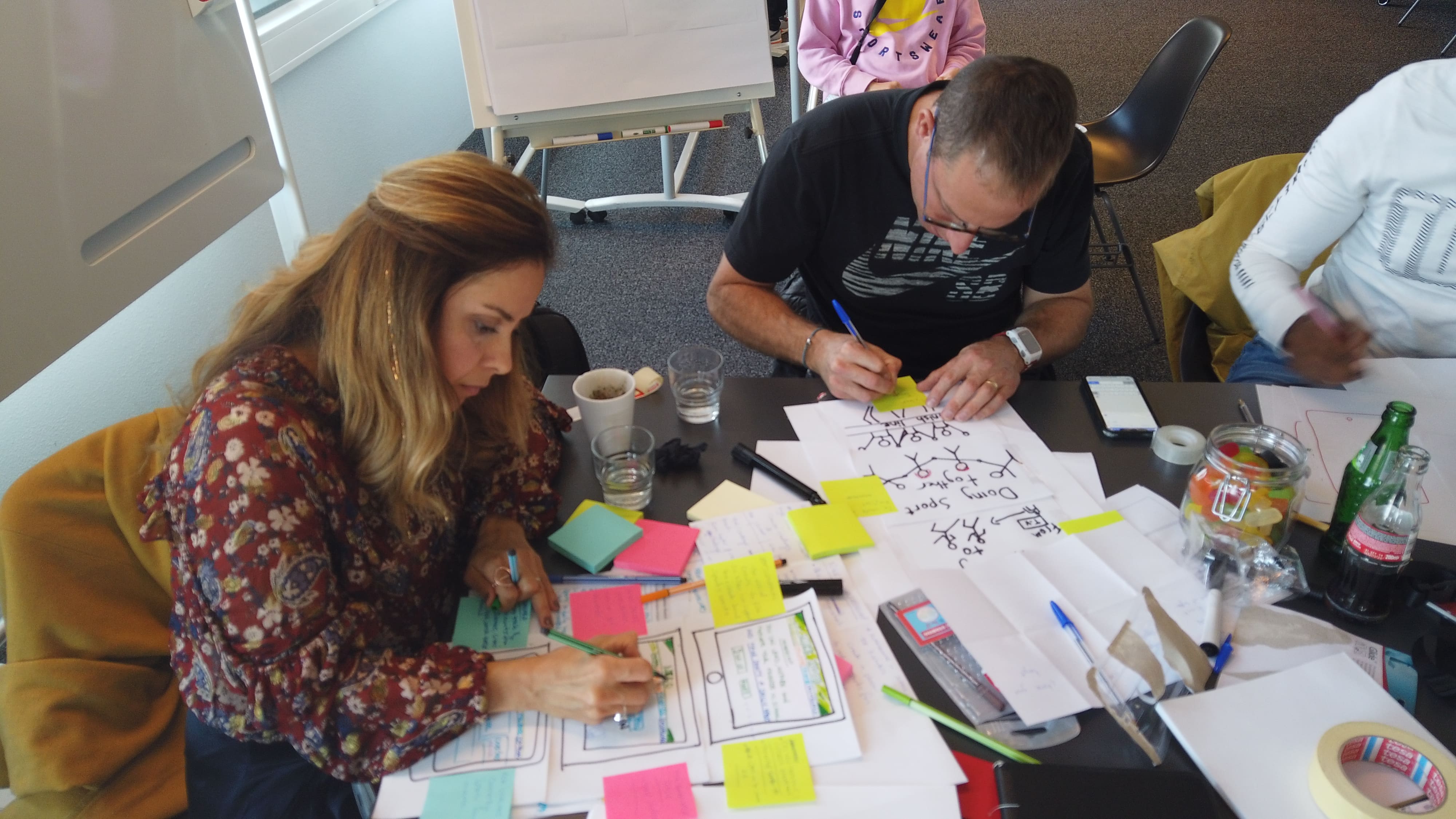
While we support all delivery formats, most of our implementation work is delivered virtually using Miro as a shared workspace to drive engagement, structure thinking, and keep momentum between sessions.
Using Miro as a live collaboration space allows teams to capture input, shape plans, and build alignment in real time. Each team’s progress is visible and connected, so nothing gets lost between sessions and regions stay aligned.
A hybrid model can be effective. We use virtual sessions to build understanding and shape direction; in-person time for committing to big decisions. This keeps travel to a minimum while still delivering the focus and connection of face-to-face.
Whether it’s virtual or in-person, the goal is the same: create shared ownership, faster alignment, and real action.
While we support all delivery formats, most of our implementation work is delivered virtually using Miro as a shared workspace to drive engagement, structure thinking, and keep momentum between sessions.
Using Miro as a live collaboration space allows teams to capture input, shape plans, and build alignment in real time. Each team’s progress is visible and connected, so nothing gets lost between sessions and regions stay aligned.
A hybrid model can be effective. We use virtual sessions to build understanding and shape direction; in-person time for committing to big decisions. This keeps travel to a minimum while still delivering the focus and connection of face-to-face.
Whether it’s virtual or in-person, the goal is the same: create shared ownership, faster alignment, and real action.
Inside a strategic implementation project.
In just four weeks, we guide teams through a focused, collaborative process.
Inspired by behavioural science and strategy models like Hoshin Kanri, our approach creates structured moments of alignment where teams shape the plan in their world, and connect their work to the bigger picture.
Engage
We set the stage with clarity, context, and energy from the top.
We kick off with senior leaders communicating the why behind the strategy and building momentum from the start. Then we guide functional teams through a series of workshops designed to cascade the strategy and build shared understanding across the business. This phase typically includes:
Kick-off video from leadership to communicate the core strategic pillars
Pre-briefs to prime teams on what’s ahead and what’s expected
Workshop design tailored to your organisation’s needs and pace
Build
We help teams turn strategy into tailored, actionable roadmaps.
This is where alignment gets real. Through in-context working sessions, teams translate the strategy into clear, functional plans and reconnect with sponsors at key points to maintain alignment and momentum. This phase includes:
Strategy sessions that help teams shape their part of the plan
Sponsor check-ins to validate direction and remove roadblocks
Plans and roadmaps that are specific, measurable, and ready to launch
Commit
We lock in approval and build momentum to move.
Once plans are in place, we help teams pitch plans to leadership creating a moment of shared confidence, clarity, and commitment across the business. From there, we help lock in delivery with lightweight governance and ongoing check-ins to ensure things stay on track.
Plan sign-off moments with leadership and sponsors
Final strategy documents and delivery-ready roadmaps
Quarterly check-ins to track progress and recalibrate if needed
Inside a strategic implementation project.
In just four weeks, we guide teams through a focused, collaborative process.
Inspired by behavioural science and strategy models like Hoshin Kanri, our approach creates structured moments of alignment where teams shape the plan in their world, and connect their work to the bigger picture.
Engage
We set the stage with clarity, context, and energy from the top.
We kick off with senior leaders communicating the why behind the strategy and building momentum from the start. Then we guide functional teams through a series of workshops designed to cascade the strategy and build shared understanding across the business. This phase typically includes:
Kick-off video from leadership to communicate the core strategic pillars
Pre-briefs to prime teams on what’s ahead and what’s expected
Workshop design tailored to your organisation’s needs and pace
Build
We help teams turn strategy into tailored, actionable roadmaps.
This is where alignment gets real. Through in-context working sessions, teams translate the strategy into clear, functional plans and reconnect with sponsors at key points to maintain alignment and momentum. This phase includes:
Strategy sessions that help teams shape their part of the plan
Sponsor check-ins to validate direction and remove roadblocks
Plans and roadmaps that are specific, measurable, and ready to launch
Commit
We lock in approval and build momentum to move.
Once plans are in place, we help teams pitch plans to leadership creating a moment of shared confidence, clarity, and commitment across the business. From there, we help lock in delivery with lightweight governance and ongoing check-ins to ensure things stay on track.
Plan sign-off moments with leadership and sponsors
Final strategy documents and delivery-ready roadmaps
Quarterly check-ins to track progress and recalibrate if needed
Inside a strategic implementation project.
In just four weeks, we guide teams through a focused, collaborative process.
Inspired by behavioural science and strategy models like Hoshin Kanri, our approach creates structured moments of alignment where teams shape the plan in their world, and connect their work to the bigger picture.
Engage
We set the stage with clarity, context, and energy from the top.
We kick off with senior leaders communicating the why behind the strategy and building momentum from the start. Then we guide functional teams through a series of workshops designed to cascade the strategy and build shared understanding across the business. This phase typically includes:
Kick-off video from leadership to communicate the core strategic pillars
Pre-briefs to prime teams on what’s ahead and what’s expected
Workshop design tailored to your organisation’s needs and pace
Build
We help teams turn strategy into tailored, actionable roadmaps.
This is where alignment gets real. Through in-context working sessions, teams translate the strategy into clear, functional plans and reconnect with sponsors at key points to maintain alignment and momentum. This phase includes:
Strategy sessions that help teams shape their part of the plan
Sponsor check-ins to validate direction and remove roadblocks
Plans and roadmaps that are specific, measurable, and ready to launch
Commit
We lock in approval and build momentum to move.
Once plans are in place, we help teams pitch plans to leadership creating a moment of shared confidence, clarity, and commitment across the business. From there, we help lock in delivery with lightweight governance and ongoing check-ins to ensure things stay on track.
Plan sign-off moments with leadership and sponsors
Final strategy documents and delivery-ready roadmaps
Quarterly check-ins to track progress and recalibrate if needed


The ROI of company-wide strategic adoption
The Sprint Valley approach is trusted by leadership teams in complex organisations to move decisively without sacrificing buy-in. Our approach works across markets, functions, and industries, helping teams align quickly and deliver what matters.
Each of the outcomes below was delivered through our strategy adoption programme, designed to help teams turn high-level strategy into fully aligned functional plans in 4 weeks.

Implementing strategy through business functions
When strategy hits a functional team, the default assumption is: “They just need more detail.” But more detail isn’t always the answer. What most functions need is decision safety—the clarity, confidence, and connection required to act without second-guessing or delay.

01
Clarity on what’s fixed vs. flexible
What parts of the strategy are set in stone and where do teams have room to tailor? Without this, people either reinvent the wheel or freeze up, afraid to get it wrong.
Tip: Use visual boundaries (e.g. "non-negotiables" vs. "team choice") to reduce uncertainty and prompt confident action.

02
Connection to the teams they depend on
Functions don’t operate in isolation. Whether it’s Sales and Ops, or Tech and Product, progress often depends on coordination. Without structured points of alignment, teams move in parallel but never connect.
Tip: Build in structured alignment points across functions to surface blockers and co-own trade-offs early.

03
Confidence their decisions won't get overturned later
If decisions get reopened two levels up, momentum collapses. Teams need sponsorship, not just sign-off. That means clear escalation paths, check-ins, and leadership backing at key moments.
Tip: Don’t wait until the end to get leadership involved. Use regular sponsor check-ins to lock decisions early, show teams their work is endorsed, and reduce rework.

04
A system that makes strategy visible
Even when teams have clarity, confidence, and connection, adoption can still stall if strategy lives in slides. Strategy software like Cascade turns strategy into a system that drives accountability and transparency. Teams can see how their goals link to the wider plan, leaders get real-time visibility on progress and bottlenecks, and conversations shift from “What are we doing?” to “How do we make this work faster?”
Tip: Explore strategy-tracking software like Cascade or ask us for recommendations. The right system makes accountability and transparency effortless.
Implementing strategy through business functions
When strategy hits a functional team, the default assumption is: “They just need more detail.” But more detail isn’t always the answer. What most functions need is decision safety—the clarity, confidence, and connection required to act without second-guessing or delay.

01
Clarity on what’s fixed vs. flexible
What parts of the strategy are set in stone and where do teams have room to tailor? Without this, people either reinvent the wheel or freeze up, afraid to get it wrong.
Tip: Use visual boundaries (e.g. "non-negotiables" vs. "team choice") to reduce uncertainty and prompt confident action.

02
Connection to the teams they depend on
Functions don’t operate in isolation. Whether it’s Sales and Ops, or Tech and Product, progress often depends on coordination. Without structured points of alignment, teams move in parallel but never connect.
Tip: Build in structured alignment points across functions to surface blockers and co-own trade-offs early.

03
Confidence their decisions won't get overturned later
If decisions get reopened two levels up, momentum collapses. Teams need sponsorship, not just sign-off. That means clear escalation paths, check-ins, and leadership backing at key moments.
Tip: Don’t wait until the end to get leadership involved. Use regular sponsor check-ins to lock decisions early, show teams their work is endorsed, and reduce rework.

04
A system that makes strategy visible
Even when teams have clarity, confidence, and connection, adoption can still stall if strategy lives in slides. Strategy software like Cascade turns strategy into a system that drives accountability and transparency. Teams can see how their goals link to the wider plan, leaders get real-time visibility on progress and bottlenecks, and conversations shift from “What are we doing?” to “How do we make this work faster?”
Tip: Explore strategy-tracking software like Cascade or ask us for recommendations. The right system makes accountability and transparency effortless.
Implementing strategy through business functions
When strategy hits a functional team, the default assumption is: “They just need more detail.” But more detail isn’t always the answer. What most functions need is decision safety—the clarity, confidence, and connection required to act without second-guessing or delay.

01
Clarity on what’s fixed vs. flexible
What parts of the strategy are set in stone and where do teams have room to tailor? Without this, people either reinvent the wheel or freeze up, afraid to get it wrong.
Tip: Use visual boundaries (e.g. "non-negotiables" vs. "team choice") to reduce uncertainty and prompt confident action.

02
Connection to the teams they depend on
Functions don’t operate in isolation. Whether it’s Sales and Ops, or Tech and Product, progress often depends on coordination. Without structured points of alignment, teams move in parallel but never connect.
Tip: Build in structured alignment points across functions to surface blockers and co-own trade-offs early.

03
Confidence their decisions won't get overturned later
If decisions get reopened two levels up, momentum collapses. Teams need sponsorship, not just sign-off. That means clear escalation paths, check-ins, and leadership backing at key moments.
Tip: Don’t wait until the end to get leadership involved. Use regular sponsor check-ins to lock decisions early, show teams their work is endorsed, and reduce rework.

04
A system that makes strategy visible
Even when teams have clarity, confidence, and connection, adoption can still stall if strategy lives in slides. Strategy software like Cascade turns strategy into a system that drives accountability and transparency. Teams can see how their goals link to the wider plan, leaders get real-time visibility on progress and bottlenecks, and conversations shift from “What are we doing?” to “How do we make this work faster?”
Tip: Explore strategy-tracking software like Cascade or ask us for recommendations. The right system makes accountability and transparency effortless.