Results

How Sovereign Capital grew revenue by 20% in 12 months

With Sprint Valley’s behavioural science-led experimentation, Sovereign's private equity team were able to turn insights into revenue growth in a portfolio company.

0

0

%

Revenue Growth

20% revenue growth was achieved, with even higher gains in profitability.

0

0

k

Debtors Avoided Court Action

0

0

Experiments Delivered

Results

How Sovereign Capital grew revenue by 20% in 12 months

With Sprint Valley’s behavioural science-led experimentation, Sovereign's private equity team were able to turn insights into revenue growth in a portfolio company.

0

0

%

Revenue Growth

20% revenue growth was achieved, with even higher gains in profitability.

0

0

k

Debtors Avoided Court Action

0

0

Experiments Delivered

Results

How Sovereign Capital grew revenue by 20% in 12 months

With Sprint Valley’s behavioural science-led experimentation, Sovereign's private equity team were able to turn insights into revenue growth in a portfolio company.

0

0

%

Revenue Growth

20% revenue growth was achieved, with even higher gains in profitability.

0

0

k

Debtors Avoided Court Action

0

0

Experiments Delivered

Sparking Growth with a "Test and Learn" Engine

Sparking Growth with a "Test and Learn" Engine

Sparking Growth with a "Test and Learn" Engine

We worked with a Private-Equity owned Debt Recovery group, right in the middle of a major operating model shift.

The business employed 600 people across three UK offices and was navigating this change alongside key stakeholders including investors, the board, operations, HR, and IT.

Looking externally for new growth opportunities

Looking externally for new growth opportunities

Looking externally for new growth opportunities

Our approach turns organisational complexity into clear, actionable insights. We help leadership teams navigate uncertainty with precision and confidence.

Our challenge looked something like this

The Private Equity owners had set ambitious growth targets.

The business was already managing over two million debtor cases every year, servicing more than 100 clients. Performance was solid, but it had plateaued. Recovery rates were steady, but the growth curve had gone flat.

What the leadership team needed wasn’t another internal deep dive—they were hungry for fresh, external perspectives. They wanted to find new opportunities, quickly, and they needed a partner who could help them move fast.
Optimising the customer journey with experiements

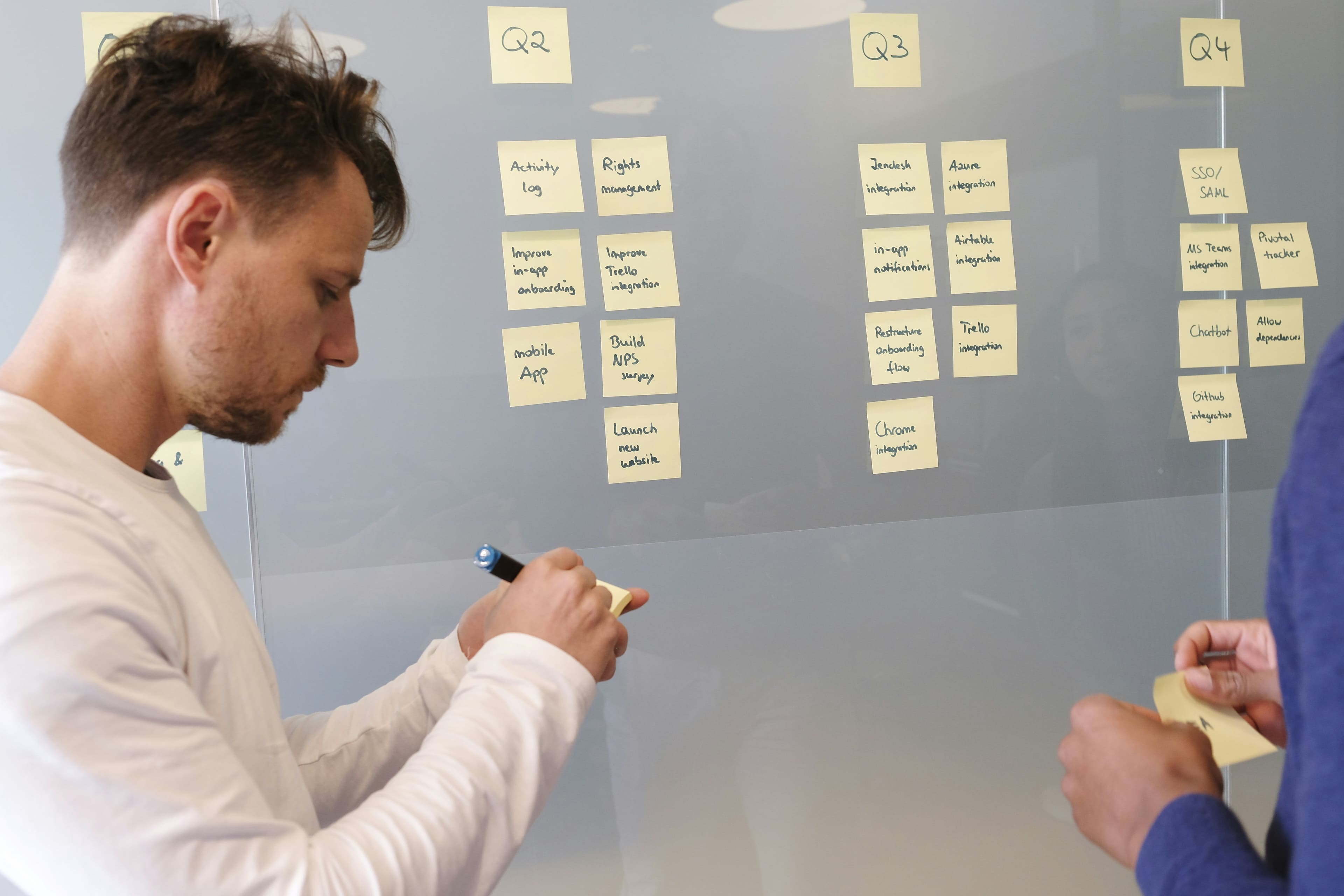
We introduced a programme of structured experimentation to help the team unlock growth by optimising the customer journey.

Phase 1: Understand

Find the friction, not just the numbers.

Before we talked solutions, we went where the action was — sitting alongside call centre agents, shadowing debt recovery teams, and listening to customers in moments of tension.

The goal? Get under the skin of the service experience and understand where trust was breaking down.

What surfaced wasn’t a single root cause, but a pattern: a series of subtle frictions that added up to missed opportunities. Unclear payment options. Clunky handoffs. Moments that created anxiety instead of clarity.

Using our behavioural insight process, we mapped 12 of these friction points — and showed the team how small changes could unlock big shifts in behaviour.

Phase 2: Design

Build smarter, simpler paths to action.

With friction points mapped, we shifted into design mode. But this wasn’t about fixing everything at once. It was about designing high-leverage interventions the team could act on fast.

Together, we workshopped solutions, prioritised opportunities, and shaped experiments tailored to real customer behaviours — not just internal assumptions.

From re-sequencing payment messages to simplifying decision flows, each idea was framed as a practical test: quick to launch, easy to measure, and safe to learn from.

Importantly, we built in ownership. Cross-functional teams led the design process, making the solutions theirs from day one — not something done to them.

Phase 3: Test & Learn

Shift strategy from talk to traction.

With experiments in hand, we moved into action — launching a series of low-risk, high-learning tests across customer touchpoints.

Each test was tracked in real-time using a simple measurement framework. We weren’t looking for perfect; we were looking for progress. What worked. What didn’t. What to scale.

As results came in, confidence grew. Teams started spotting their own opportunities, adapting playbooks, and asking better questions. A ‘test and learn’ engine was born — not just as a project, but a habit.

This wasn’t change by committee. It was change by evidence. And that’s what created momentum that stuck.

Optimising the customer journey with experiements

We introduced a programme of structured experimentation to help the team unlock growth by optimising the customer journey.

Phase 1: Understand

Find the friction, not just the numbers.

Before we talked solutions, we went where the action was — sitting alongside call centre agents, shadowing debt recovery teams, and listening to customers in moments of tension.

The goal? Get under the skin of the service experience and understand where trust was breaking down.

What surfaced wasn’t a single root cause, but a pattern: a series of subtle frictions that added up to missed opportunities. Unclear payment options. Clunky handoffs. Moments that created anxiety instead of clarity.

Using our behavioural insight process, we mapped 12 of these friction points — and showed the team how small changes could unlock big shifts in behaviour.

Phase 2: Design

Build smarter, simpler paths to action.

With friction points mapped, we shifted into design mode. But this wasn’t about fixing everything at once. It was about designing high-leverage interventions the team could act on fast.

Together, we workshopped solutions, prioritised opportunities, and shaped experiments tailored to real customer behaviours — not just internal assumptions.

From re-sequencing payment messages to simplifying decision flows, each idea was framed as a practical test: quick to launch, easy to measure, and safe to learn from.

Importantly, we built in ownership. Cross-functional teams led the design process, making the solutions theirs from day one — not something done to them.

Phase 3: Test & Learn

Shift strategy from talk to traction.

With experiments in hand, we moved into action — launching a series of low-risk, high-learning tests across customer touchpoints.

Each test was tracked in real-time using a simple measurement framework. We weren’t looking for perfect; we were looking for progress. What worked. What didn’t. What to scale.

As results came in, confidence grew. Teams started spotting their own opportunities, adapting playbooks, and asking better questions. A ‘test and learn’ engine was born — not just as a project, but a habit.

This wasn’t change by committee. It was change by evidence. And that’s what created momentum that stuck.

Optimising the customer journey with experiements

We introduced a programme of structured experimentation to help the team unlock growth by optimising the customer journey.

Phase 1: Understand

Find the friction, not just the numbers.

Before we talked solutions, we went where the action was — sitting alongside call centre agents, shadowing debt recovery teams, and listening to customers in moments of tension.

The goal? Get under the skin of the service experience and understand where trust was breaking down.

What surfaced wasn’t a single root cause, but a pattern: a series of subtle frictions that added up to missed opportunities. Unclear payment options. Clunky handoffs. Moments that created anxiety instead of clarity.

Using our behavioural insight process, we mapped 12 of these friction points — and showed the team how small changes could unlock big shifts in behaviour.

Phase 2: Design

Build smarter, simpler paths to action.

With friction points mapped, we shifted into design mode. But this wasn’t about fixing everything at once. It was about designing high-leverage interventions the team could act on fast.

Together, we workshopped solutions, prioritised opportunities, and shaped experiments tailored to real customer behaviours — not just internal assumptions.

From re-sequencing payment messages to simplifying decision flows, each idea was framed as a practical test: quick to launch, easy to measure, and safe to learn from.

Importantly, we built in ownership. Cross-functional teams led the design process, making the solutions theirs from day one — not something done to them.

Phase 3: Test & Learn

Shift strategy from talk to traction.

With experiments in hand, we moved into action — launching a series of low-risk, high-learning tests across customer touchpoints.

Each test was tracked in real-time using a simple measurement framework. We weren’t looking for perfect; we were looking for progress. What worked. What didn’t. What to scale.

As results came in, confidence grew. Teams started spotting their own opportunities, adapting playbooks, and asking better questions. A ‘test and learn’ engine was born — not just as a project, but a habit.

This wasn’t change by committee. It was change by evidence. And that’s what created momentum that stuck.

Looking externally for new growth opportunities

Looking externally for new growth opportunities

Looking externally for new growth opportunities

The impact of this work was significant:

20% revenue growth was achieved, with even higher gains in profitability.

A ‘test and learn’ culture became embedded across the business, creating momentum for continued innovation.

The team developed new behavioural IP to strengthen their investor story and future growth narrative.

The business was recognised as a finalist for 'Technology Innovation of the Year' at a leading industry awards event.

This is what it looks like when a business goes beyond good enough and starts building a system thats wired for discovery.

If youre stuck on a performance plateau, wed love to help you find your next 20%.