
Pillars

Business Experimentation Guide

How market and channel leaders use behavioural science and experimentation to unlock performance.

Luke Battye (UK)

·

Pillars

Business Experimentation Guide

How market and channel leaders use behavioural science and experimentation to unlock performance.

Luke Battye (UK)

·

Pillars

Business Experimentation Guide

How market and channel leaders use behavioural science and experimentation to unlock performance.

Luke Battye (UK)

·

Why experimentation in business matters

Why experimentation in business matters

Why experimentation in business matters

Most organisations invest heavily in creating strategies. But research shows that 67% of well-formulated strategies still fail because of poor execution. Most often, the problem isn’t the plan itself—it’s knowing which actions will actually deliver it.

Your business strategy defines what needs to change. It defines ideal outcomes, critical milestones, and the key levers to shift. However, it rarely tells you exactly how to shift those levers to make change happen.

When it's time to implement your strategic plan, internal teams start to debate which ideas will work. No one wants to risk reputational damage by getting it wrong. Decisions stall, or worse, progress is driven by gut feel.

What teams need isn’t more ideas. They need clarity, evidence, and a safe way to learn what works. That’s where business experimentation comes in.

Instead of committing to big, untested bets—or watering down ideas to get consensus—experimentation gives you a structured way to test and learn. You run simple, smart experiments that reveal what actually shifts behaviour, drives results, and delivers on the strategy.

At Sprint Valley, we call this Strategic Optimisation. It replaces guesswork with insight. Opinion with data. Debate with direction. You move fast, reduce risk, and scale what works without losing strategic intent.

In fact, research by IDEO found that teams that test five or more ideas are 50% more likely to successfully launch than those that stick with one.

This guide shows you how to take that mindset and turn it into measurable results. You’ll learn how to apply behavioural science and structured experimentation to implement strategy in a way that shifts the behaviours that matter.

Your business strategy defines what needs to change. It defines ideal outcomes, critical milestones, and the key levers to shift. However, it rarely tells you exactly how to shift those levers to make change happen.

When it's time to implement your strategic plan, internal teams start to debate which ideas will work. No one wants to risk reputational damage by getting it wrong. Decisions stall, or worse, progress is driven by gut feel.

What teams need isn’t more ideas. They need clarity, evidence, and a safe way to learn what works. That’s where business experimentation comes in.

Instead of committing to big, untested bets—or watering down ideas to get consensus—experimentation gives you a structured way to test and learn. You run simple, smart experiments that reveal what actually shifts behaviour, drives results, and delivers on the strategy.

At Sprint Valley, we call this Strategic Optimisation. It replaces guesswork with insight. Opinion with data. Debate with direction. You move fast, reduce risk, and scale what works without losing strategic intent.

In fact, research by IDEO found that teams that test five or more ideas are 50% more likely to successfully launch than those that stick with one.

This guide shows you how to take that mindset and turn it into measurable results. You’ll learn how to apply behavioural science and structured experimentation to implement strategy in a way that shifts the behaviours that matter.

Your business strategy defines what needs to change. It defines ideal outcomes, critical milestones, and the key levers to shift. However, it rarely tells you exactly how to shift those levers to make change happen.

When it's time to implement your strategic plan, internal teams start to debate which ideas will work. No one wants to risk reputational damage by getting it wrong. Decisions stall, or worse, progress is driven by gut feel.

What teams need isn’t more ideas. They need clarity, evidence, and a safe way to learn what works. That’s where business experimentation comes in.

Instead of committing to big, untested bets—or watering down ideas to get consensus—experimentation gives you a structured way to test and learn. You run simple, smart experiments that reveal what actually shifts behaviour, drives results, and delivers on the strategy.

At Sprint Valley, we call this Strategic Optimisation. It replaces guesswork with insight. Opinion with data. Debate with direction. You move fast, reduce risk, and scale what works without losing strategic intent.

In fact, research by IDEO found that teams that test five or more ideas are 50% more likely to successfully launch than those that stick with one.

This guide shows you how to take that mindset and turn it into measurable results. You’ll learn how to apply behavioural science and structured experimentation to implement strategy in a way that shifts the behaviours that matter.

In this guide, youll discover:

Why experimentation is essential to performance

How leading organisations build a culture of test-and-learn thinking

A proven framework to test, learn, and scale what works

What is business experimentation?

What is business experimentation?

What is business experimentation?

Business experimentation is the use of structured experimentation to shift performance in a measurable, scalable, and low-risk way. It’s how you move from a strategic KPI to a tested, proven set of actions that shift real-world performance.

Where traditional approaches rely on upfront decisions and large-scale rollouts, strategic optimisation helps you test what actually works before you commit. It removes the guesswork from implementation by showing you which ideas drive change, and which don’t.

It’s not about endless testing or innovation for its own sake. It’s about learning, quickly and safely, what shifts behaviour in a way that moves the metrics your strategy depends on.


A team may be exploring questions like:

  • What change will increase conversion?

  • How can we lift average order value without adding friction?

  • What offer gets more people to switch or upgrade?

  • What is most effective in reducing staff turnover?

Strategic optimisation gives you a fast, focused way to answer these questions—grounded in behavioural science and commercial impact. It helps teams get clear on four critical points:


  • Are we solving the right problem?

  • Are we backing the ideas most likely to shift behaviour?

  • How can we test quickly and safely, without taking big risks?

  • What should we scale, and what should we stop?

Where traditional approaches rely on upfront decisions and large-scale rollouts, strategic optimisation helps you test what actually works before you commit. It removes the guesswork from implementation by showing you which ideas drive change, and which don’t.

It’s not about endless testing or innovation for its own sake. It’s about learning, quickly and safely, what shifts behaviour in a way that moves the metrics your strategy depends on.


A team may be exploring questions like:

  • What change will increase conversion?

  • How can we lift average order value without adding friction?

  • What offer gets more people to switch or upgrade?

  • What is most effective in reducing staff turnover?

Strategic optimisation gives you a fast, focused way to answer these questions—grounded in behavioural science and commercial impact. It helps teams get clear on four critical points:


  • Are we solving the right problem?

  • Are we backing the ideas most likely to shift behaviour?

  • How can we test quickly and safely, without taking big risks?

  • What should we scale, and what should we stop?

Where traditional approaches rely on upfront decisions and large-scale rollouts, strategic optimisation helps you test what actually works before you commit. It removes the guesswork from implementation by showing you which ideas drive change, and which don’t.

It’s not about endless testing or innovation for its own sake. It’s about learning, quickly and safely, what shifts behaviour in a way that moves the metrics your strategy depends on.


A team may be exploring questions like:

  • What change will increase conversion?

  • How can we lift average order value without adding friction?

  • What offer gets more people to switch or upgrade?

  • What is most effective in reducing staff turnover?

Strategic optimisation gives you a fast, focused way to answer these questions—grounded in behavioural science and commercial impact. It helps teams get clear on four critical points:


  • Are we solving the right problem?

  • Are we backing the ideas most likely to shift behaviour?

  • How can we test quickly and safely, without taking big risks?

  • What should we scale, and what should we stop?

7 signals it's time to experiment

7 signals it's time to experiment

7 signals it's time to experiment

Strategic optimisation becomes essential when you are under pressure to deliver performance, but unclear about what changes will actually move the needle.

Here are the most common signals that it is time to shift from opinion-driven debates to structured experimentation:


  1. You’re chasing a clear commercial metric but stuck in debate on how to get here

Conversion, spend, uptake. You know what needs to change, but your team can't agree on the “how.” Strategic experimentation breaks through stalemates by testing interventions quickly and demonstrating what truly works.


  1. You’re facing high reputational or operational risk

In customer-facing channels, the cost of a wrong decision is steep. Experimentation lets you establish a test-and-learn strategy that validates options in a safe, controlled way before you roll them out at scale.


  1. You’ve made changes before, but can’t prove what worked

Attribution is messy. Multiple initiatives launched at once make it impossible to isolate impact. A disciplined experimentation framework makes results measurable, so you can identify and invest in what truly drives impact.


  1. Your backlog is full of ideas, but nothing is moving

Everyone has ideas, but none are moving forward because priorities are unclear and resources are stretched thin. Experimentation creates focus by forcing teams to test and learn from a small number of high-impact initiatives.


  1. You need quick wins without big risks

Waiting six months for a transformation is not an option. Strategic experimentation delivers visible progress quickly, proving what works on a small scale before committing larger resources.


  1. You’re struggling with customer retention

Declining repeat purchases, falling engagement, or shrinking customer lifetime value are all signals that it’s time to test new interventions in the customer experience. Experiments reveal which changes actually keep customers coming back.


  1. You’re seeing weak employee retention

High turnover often signals that something in the employee experience isn’t working—from unclear career paths to a lack of recognition or support. Instead of guessing at solutions, experimentation lets you test practical changes in real time together with your employees. The results show which interventions actually strengthen employee retention and create a more positive, lasting employee experience.
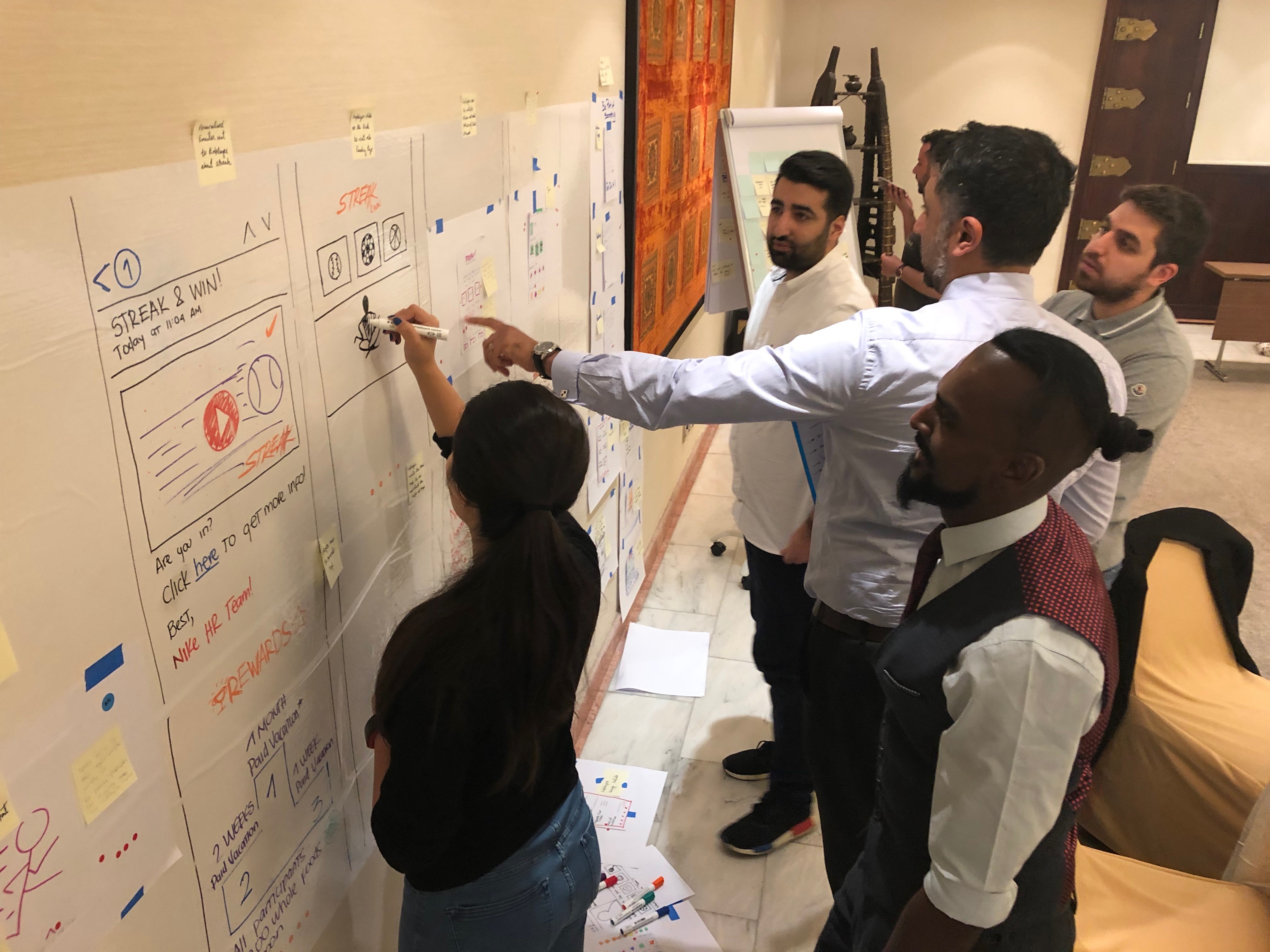
Here are the most common signals that it is time to shift from opinion-driven debates to structured experimentation:


  1. You’re chasing a clear commercial metric but stuck in debate on how to get here

Conversion, spend, uptake. You know what needs to change, but your team can't agree on the “how.” Strategic experimentation breaks through stalemates by testing interventions quickly and demonstrating what truly works.


  1. You’re facing high reputational or operational risk

In customer-facing channels, the cost of a wrong decision is steep. Experimentation lets you establish a test-and-learn strategy that validates options in a safe, controlled way before you roll them out at scale.


  1. You’ve made changes before, but can’t prove what worked

Attribution is messy. Multiple initiatives launched at once make it impossible to isolate impact. A disciplined experimentation framework makes results measurable, so you can identify and invest in what truly drives impact.


  1. Your backlog is full of ideas, but nothing is moving

Everyone has ideas, but none are moving forward because priorities are unclear and resources are stretched thin. Experimentation creates focus by forcing teams to test and learn from a small number of high-impact initiatives.


  1. You need quick wins without big risks

Waiting six months for a transformation is not an option. Strategic experimentation delivers visible progress quickly, proving what works on a small scale before committing larger resources.


  1. You’re struggling with customer retention

Declining repeat purchases, falling engagement, or shrinking customer lifetime value are all signals that it’s time to test new interventions in the customer experience. Experiments reveal which changes actually keep customers coming back.


  1. You’re seeing weak employee retention

High turnover often signals that something in the employee experience isn’t working—from unclear career paths to a lack of recognition or support. Instead of guessing at solutions, experimentation lets you test practical changes in real time together with your employees. The results show which interventions actually strengthen employee retention and create a more positive, lasting employee experience.

Here are the most common signals that it is time to shift from opinion-driven debates to structured experimentation:


  1. You’re chasing a clear commercial metric but stuck in debate on how to get here

Conversion, spend, uptake. You know what needs to change, but your team can't agree on the “how.” Strategic experimentation breaks through stalemates by testing interventions quickly and demonstrating what truly works.


  1. You’re facing high reputational or operational risk

In customer-facing channels, the cost of a wrong decision is steep. Experimentation lets you establish a test-and-learn strategy that validates options in a safe, controlled way before you roll them out at scale.


  1. You’ve made changes before, but can’t prove what worked

Attribution is messy. Multiple initiatives launched at once make it impossible to isolate impact. A disciplined experimentation framework makes results measurable, so you can identify and invest in what truly drives impact.


  1. Your backlog is full of ideas, but nothing is moving

Everyone has ideas, but none are moving forward because priorities are unclear and resources are stretched thin. Experimentation creates focus by forcing teams to test and learn from a small number of high-impact initiatives.


  1. You need quick wins without big risks

Waiting six months for a transformation is not an option. Strategic experimentation delivers visible progress quickly, proving what works on a small scale before committing larger resources.


  1. You’re struggling with customer retention

Declining repeat purchases, falling engagement, or shrinking customer lifetime value are all signals that it’s time to test new interventions in the customer experience. Experiments reveal which changes actually keep customers coming back.


  1. You’re seeing weak employee retention

High turnover often signals that something in the employee experience isn’t working—from unclear career paths to a lack of recognition or support. Instead of guessing at solutions, experimentation lets you test practical changes in real time together with your employees. The results show which interventions actually strengthen employee retention and create a more positive, lasting employee experience.

4 use cases for business experimentation

4 use cases for business experimentation

4 use cases for business experimentation

From in-store to internal performance, here are four proven use cases for business experimentation in action.

From in-store to internal performance, here are four proven use cases for business experimentation in action:

Optimise in-store kiosks

Small design changes to self-service ordering kiosks can deliver outsized commercial gains. These touchscreen stations, now common in restaurants and retail stores, handle thousands of customer interactions every day. Even subtle shifts in layout, copy, or prompts influence what people choose.

For example, in a restaurant, simply adding a “Best Seller” tag next to a high-margin item can nudge more customers to order it, increasing average spend without changing the menu.

The process is simple: start by looking at sales data to spot opportunities, identify small changes or behavioural nudges, run a series of controlled tests where some customers see the new version and others see the old one, and measure the difference in results. The winning changes can then be rolled out across every kiosk with confidence.

The results are measurable: KFC Europe worked with Sprint Valley to improve kiosk UI and lifted average order value by 1–4% within six months.

Diego Revilla, Digital Experience Specialist at KFC Spain & Portugal shared:

"The studies and methodology has helped internal teams to adapt to changing customer expectations and identify opportunities to reduce costs, make navigation faster and increase the average order value."

Improve response rates on customer communications

Customer communications—letters, emails, text messages, or app notifications—often carry critical instructions. An insurance company might send a letter reminding a customer to renew. A utility might send a text asking for payment. A transport authority might issue a notice about fees.

When these messages fail to cut through, the consequences are significant: missed deadlines, late fees, rising complaints, and reputational damage.

Small changes to wording, layout, or design can dramatically influence whether people read, understand, and act on these communications. For example, highlighting the deadline at the top of a letter, simplifying payment instructions, or reframing the cost of inaction can all boost response rates.

The results are measurable: Sprint Valley worked with Transport for London and cut the number of motorists receiving ULEZ late fees by 14% by applying behavioural nudges to their letters and testing them through live experimentation.

Employee experience: Improving performance and satisfaction

Every team has people who consistently deliver great results. The challenge for leaders is understanding why—and then helping the rest of the team achieve at the same level. Traditional approaches often rely on broad training or incentives, but these rarely uncover or scale the specific behaviours that drive real performance.

Business experimentation offers a smarter way. By analysing performance data and shadowing top performers, organisations can identify the small but critical behaviours that drive results. For example, a debt recovery agent might phrase repayment options in a way that increases agreement rates, or a sales rep might use timing cues that make customers more likely to commit.

Once these behaviours are identified, the process is straightforward: design targeted interventions that help other team members adopt the same habits, test them in live conditions, and measure the results against clear performance metrics. The winning approaches can then be embedded into training, scripts, or workflows at scale.

The results are measurable: Bristow & Sutor worked with Sprint Valley to upgrade their debt recovery strategy by uncovering and replicating high-performing behaviours. Through structured experimentation, they delivered 17.5% revenue growth.

Anthony O'Keeffe, Chief Executive Officer at Bristow & Sutor Group, shared:

"Inspirational, insightful, challenging, passionate, professional, engaging, creative, innovative, impactful, positive energy, transformational, deliver great outcomes – these are the words we would all like to describe our business partners. With Sprint Valley we get that and so much more."

Read the Bristow & Sutor case study →

Employee retention: Reducing churn

High employee turnover is rarely caused by one big issue. More often, it’s the accumulation of small moments—an unclear onboarding, a lack of recognition, or a process that creates daily frustration—that push people to leave. Traditional HR initiatives often focus on pay or perks, while overlooking the behavioural drivers that shape day-to-day experience.

Business experimentation helps uncover those hidden friction points and test practical ways to improve them. For example, small changes to how feedback is delivered, how schedules are communicated, or how career paths are framed can have a disproportionate effect on retention.

The process starts with mapping the employee journey to spot where people feel unsupported, then designing targeted interventions and testing them in live conditions. The data shows what makes a measurable difference, so you can invest in changes that matter most.

The results are measurable: Working with Sprint Valley, Agena reimagined their employee experience through a behavioural lens and reduced staff turnover by 60% in just six months.

Carly Miller, the Director of People Services at Agena Group shared:

"It's really easy for us to have conversations about profit, loss, revenue, but it's more difficult for us to have that about an experience and link the two together. And I can really see the impact that that's having in our warden teams, our attrition has been reduced significantly after us doing this piece of work with Sprint Valley."


The role of behavioural science in business experimentation

The role of behavioural science in business experimentation

The role of behavioural science in business experimentation

Running experiments is easy. Running the right experiments, well, is what delivers results.

That’s where behavioural science comes in. Most business challenges—whether it’s a customer not completing a purchase, an employee silently quitting, or a letter being ignored—are, at their core, behavioural problems. People don’t always act logically. They take shortcuts, avoid ambiguity, and rely on established habits.

Our behavioural scientists help uncover those hidden drivers and design experiments that test interventions in the moments that matter.

What Sprint Valley’s behavioural scientists do

Diagnose behavioural bottlenecks

Analysing data, journeys, and field observations to pinpoint where decisions break down.

Design nudges and interventions

Using evidence-based techniques to create simple design tweaks that make the desired choice easier, clearer, or more appealing. For example, making the best option the default (default effect), highlighting deadlines (framing), or drawing attention to key details (salience).

Build testable hypotheses

Turning insights into clear, measurable experiments that can run safely in real-world conditions.

Measure what shifts behaviour

Looking beyond headline results to see what people actually did differently. For example, more customers completing checkout, more employees using a new process, or more people responding to a message on time.

This combination of behavioural science and structured experimentation is what makes Sprint Valley’s approach different. It means every test is grounded in how people actually think, decide, and act, so the results are meaningful and scalable.

Read more in our Behavioural Science Guide → 


That’s where behavioural science comes in. Most business challenges—whether it’s a customer not completing a purchase, an employee silently quitting, or a letter being ignored—are, at their core, behavioural problems. People don’t always act logically. They take shortcuts, avoid ambiguity, and rely on established habits.

Our behavioural scientists help uncover those hidden drivers and design experiments that test interventions in the moments that matter.

What Sprint Valley’s behavioural scientists do

Diagnose behavioural bottlenecks

Analysing data, journeys, and field observations to pinpoint where decisions break down.

Design nudges and interventions

Using evidence-based techniques to create simple design tweaks that make the desired choice easier, clearer, or more appealing. For example, making the best option the default (default effect), highlighting deadlines (framing), or drawing attention to key details (salience).

Build testable hypotheses

Turning insights into clear, measurable experiments that can run safely in real-world conditions.

Measure what shifts behaviour

Looking beyond headline results to see what people actually did differently. For example, more customers completing checkout, more employees using a new process, or more people responding to a message on time.

This combination of behavioural science and structured experimentation is what makes Sprint Valley’s approach different. It means every test is grounded in how people actually think, decide, and act, so the results are meaningful and scalable.

Read more in our Behavioural Science Guide → 


That’s where behavioural science comes in. Most business challenges—whether it’s a customer not completing a purchase, an employee silently quitting, or a letter being ignored—are, at their core, behavioural problems. People don’t always act logically. They take shortcuts, avoid ambiguity, and rely on established habits.

Our behavioural scientists help uncover those hidden drivers and design experiments that test interventions in the moments that matter.

What Sprint Valley’s behavioural scientists do

Diagnose behavioural bottlenecks

Analysing data, journeys, and field observations to pinpoint where decisions break down.

Design nudges and interventions

Using evidence-based techniques to create simple design tweaks that make the desired choice easier, clearer, or more appealing. For example, making the best option the default (default effect), highlighting deadlines (framing), or drawing attention to key details (salience).

Build testable hypotheses

Turning insights into clear, measurable experiments that can run safely in real-world conditions.

Measure what shifts behaviour

Looking beyond headline results to see what people actually did differently. For example, more customers completing checkout, more employees using a new process, or more people responding to a message on time.

This combination of behavioural science and structured experimentation is what makes Sprint Valley’s approach different. It means every test is grounded in how people actually think, decide, and act, so the results are meaningful and scalable.

Read more in our Behavioural Science Guide → 


Experimentation framework: How it works

No two performance challenges are the same.

That’s why every programme is designed around the customer journeys, employee experiences, and commercial metrics that matter most to your organisation.

That said, the most effective optimisation programmes follow a common rhythm. At Sprint Valley, we structure them around three phases: Identify, Test and Scale.

Identify opportunities worth testing

We start by diagnosing where performance is stalling and where small interventions could make a big impact. This phase blends behavioural science with commercial insight to ensure we’re testing the right things, not just the loudest ideas. On most projects, we:

  • Analyse commercial and behavioural data to highlight the biggest performance gaps.


  • Use ethnographic and in-context research to gain insight into how people actually behave.


  • Shape testable hypotheses and prioritise high-impact opportunities.

Test ideas safely in the real world

Instead of debating ideas in a meeting room, we put them into practice—fast. This phase is about running low-risk, high-learning experiments that reveal what shifts behaviour in the moments that matter. Typically, we:

  • Prototype interventions and test them directly with target audiences.


  • Launch live A/B tests in controlled conditions to measure real behaviour.


  • Track impact against clear KPIs so we know which ideas deliver results

Scale what works, stop what doesnt

Every cycle ends with a decision: stop, adapt, or scale. This ensures momentum without waste and builds confidence across teams. To make results stick, we:

  • Use “Stop, Adapt, Scale” stage gates to scale strategies safely.


  • Codify successful interventions into internal playbooks so teams can replicate them.


  • Upskill teams to run future experiments independently, embedding test-and-learn into business as usual (BAU).

Experimentation framework: How it works

No two performance challenges are the same.

That’s why every programme is designed around the customer journeys, employee experiences, and commercial metrics that matter most to your organisation.

That said, the most effective optimisation programmes follow a common rhythm. At Sprint Valley, we structure them around three phases: Identify, Test and Scale.

Identify opportunities worth testing

We start by diagnosing where performance is stalling and where small interventions could make a big impact. This phase blends behavioural science with commercial insight to ensure we’re testing the right things, not just the loudest ideas. On most projects, we:

  • Analyse commercial and behavioural data to highlight the biggest performance gaps.


  • Use ethnographic and in-context research to gain insight into how people actually behave.


  • Shape testable hypotheses and prioritise high-impact opportunities.

Test ideas safely in the real world

Instead of debating ideas in a meeting room, we put them into practice—fast. This phase is about running low-risk, high-learning experiments that reveal what shifts behaviour in the moments that matter. Typically, we:

  • Prototype interventions and test them directly with target audiences.


  • Launch live A/B tests in controlled conditions to measure real behaviour.


  • Track impact against clear KPIs so we know which ideas deliver results

Scale what works, stop what doesn’t

Every cycle ends with a decision: stop, adapt, or scale. This ensures momentum without waste and builds confidence across teams. To make results stick, we:

  • Use “Stop, Adapt, Scale” stage gates to scale strategies safely.


  • Codify successful interventions into internal playbooks so teams can replicate them.


  • Upskill teams to run future experiments independently, embedding test-and-learn into business as usual (BAU).

Experimentation framework: How it works

No two performance challenges are the same.

That’s why every programme is designed around the customer journeys, employee experiences, and commercial metrics that matter most to your organisation.

That said, the most effective optimisation programmes follow a common rhythm. At Sprint Valley, we structure them around three phases: Identify, Test and Scale.

Identify opportunities worth testing

We start by diagnosing where performance is stalling and where small interventions could make a big impact. This phase blends behavioural science with commercial insight to ensure we’re testing the right things, not just the loudest ideas. On most projects, we:

  • Analyse commercial and behavioural data to highlight the biggest performance gaps.


  • Use ethnographic and in-context research to gain insight into how people actually behave.


  • Shape testable hypotheses and prioritise high-impact opportunities.

Test ideas safely in the real world

Instead of debating ideas in a meeting room, we put them into practice—fast. This phase is about running low-risk, high-learning experiments that reveal what shifts behaviour in the moments that matter. Typically, we:

  • Prototype interventions and test them directly with target audiences.


  • Launch live A/B tests in controlled conditions to measure real behaviour.


  • Track impact against clear KPIs so we know which ideas deliver results

Scale what works, stop what doesn’t

Every cycle ends with a decision: stop, adapt, or scale. This ensures momentum without waste and builds confidence across teams. To make results stick, we:

  • Use “Stop, Adapt, Scale” stage gates to scale strategies safely.


  • Codify successful interventions into internal playbooks so teams can replicate them.


  • Upskill teams to run future experiments independently, embedding test-and-learn into business as usual (BAU).

Let's shift performance with low-risk experiments.

We help channel leaders shift performance by 5-15% with low-risk experiments.

Let's shift performance with low-risk experiments.

We help channel leaders shift performance by 5-15% with low-risk experiments.

Let's shift performance with low-risk experiments.

We help channel leaders shift performance by 5-15% with low-risk experiments.

The ROI of business experimentation

The ROI of business experimentation

The ROI of business experimentation

Every organisation faces different challenges, but the goal is always the same: turn strategic goals into commercial performance.

Here are just some of the results our clients have achieved through business experimentation. Each of these clients used Sprint Valley’s Test and Learn Programme to turn strategy into tangible results.